// UI/UX Design
Wilfrid Laurier University
TIME: Sep - Dec 2025 (12 weeks)
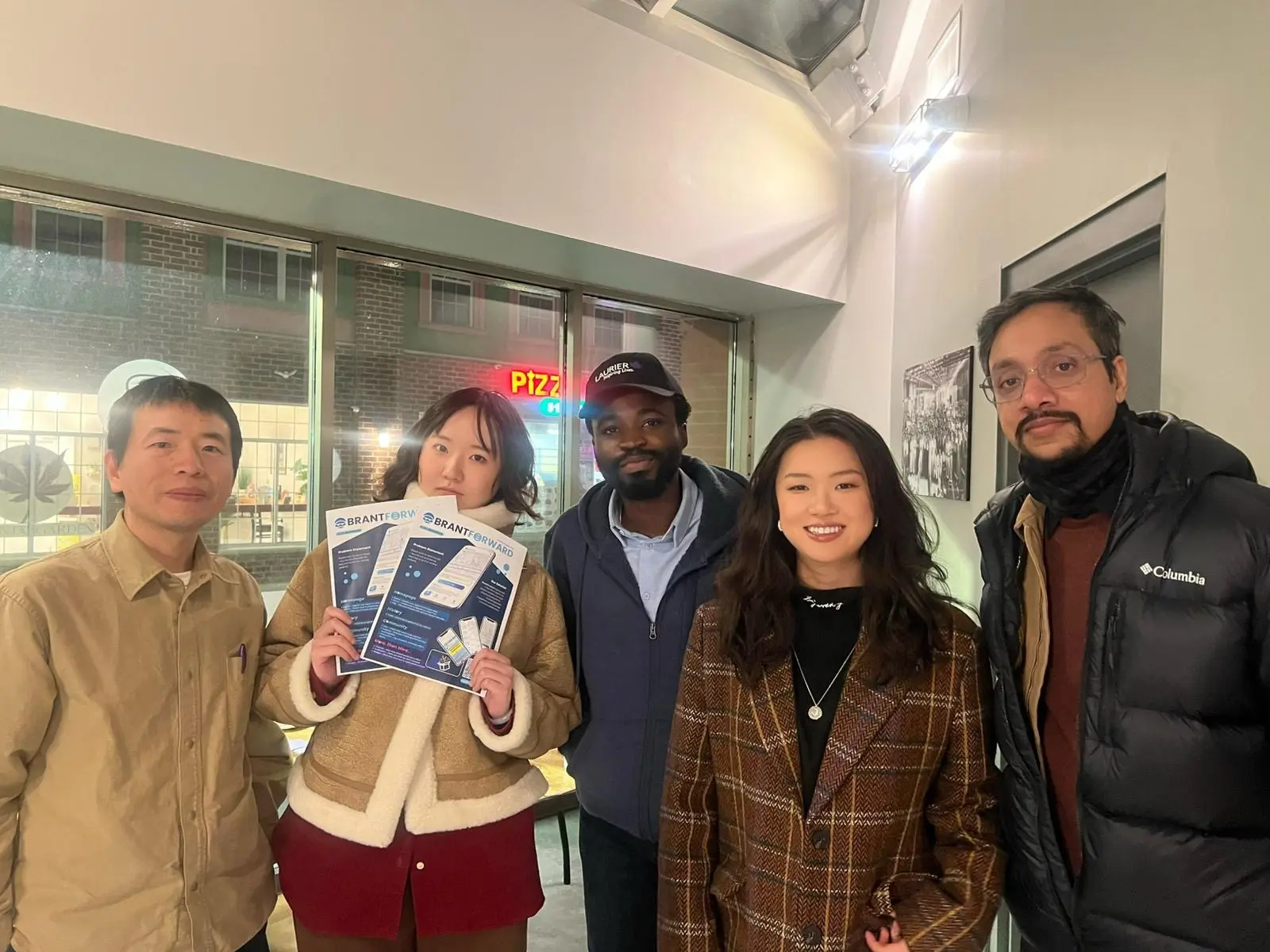
TEAM OF 5
ROLE: UX Designer (Research, Interaction Design, Prototyping)
The problem & Opportunity
Residents in Brantford often feel unsafe or unsure how to report minor urban issues, such as poor lighting, overflowing waste, or damaged sidewalks.
Existing systems are slow and lack updates, leading to frustration and disengagement from civic participation.
Design a civic reporting experience that is:
Easy to use
Community-driven
Transparent and accessible
Surveys & Interviews
These gave us breadth, understanding general attitudes, pain points, and what residents wished existed. We learned that people care deeply about their community but felt disconnected from city processes.
Research Insights
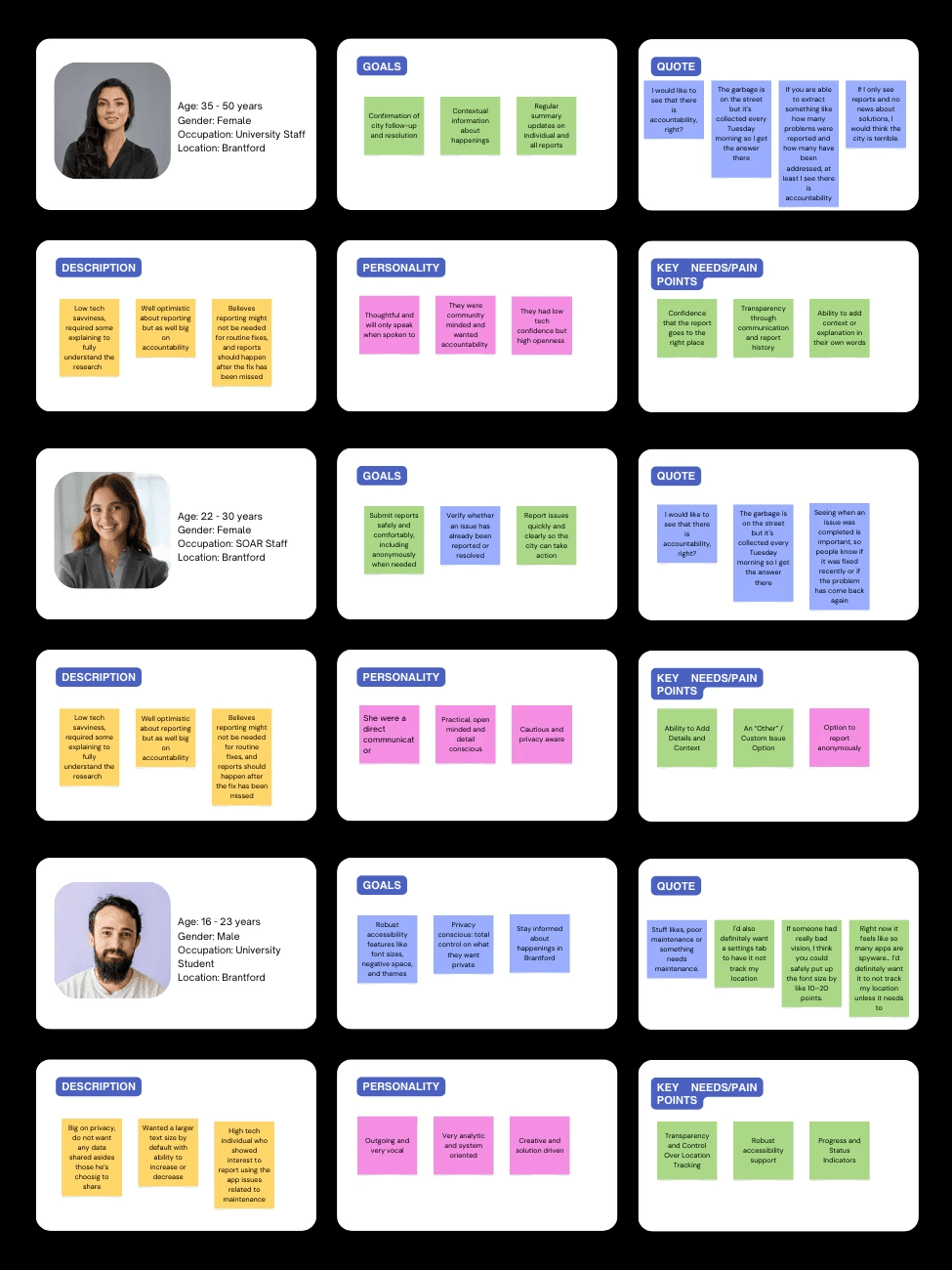
Target User Persona
We used quantitative and qualitative data from survey results and interviews to define target user profiles to build empathy during our design process
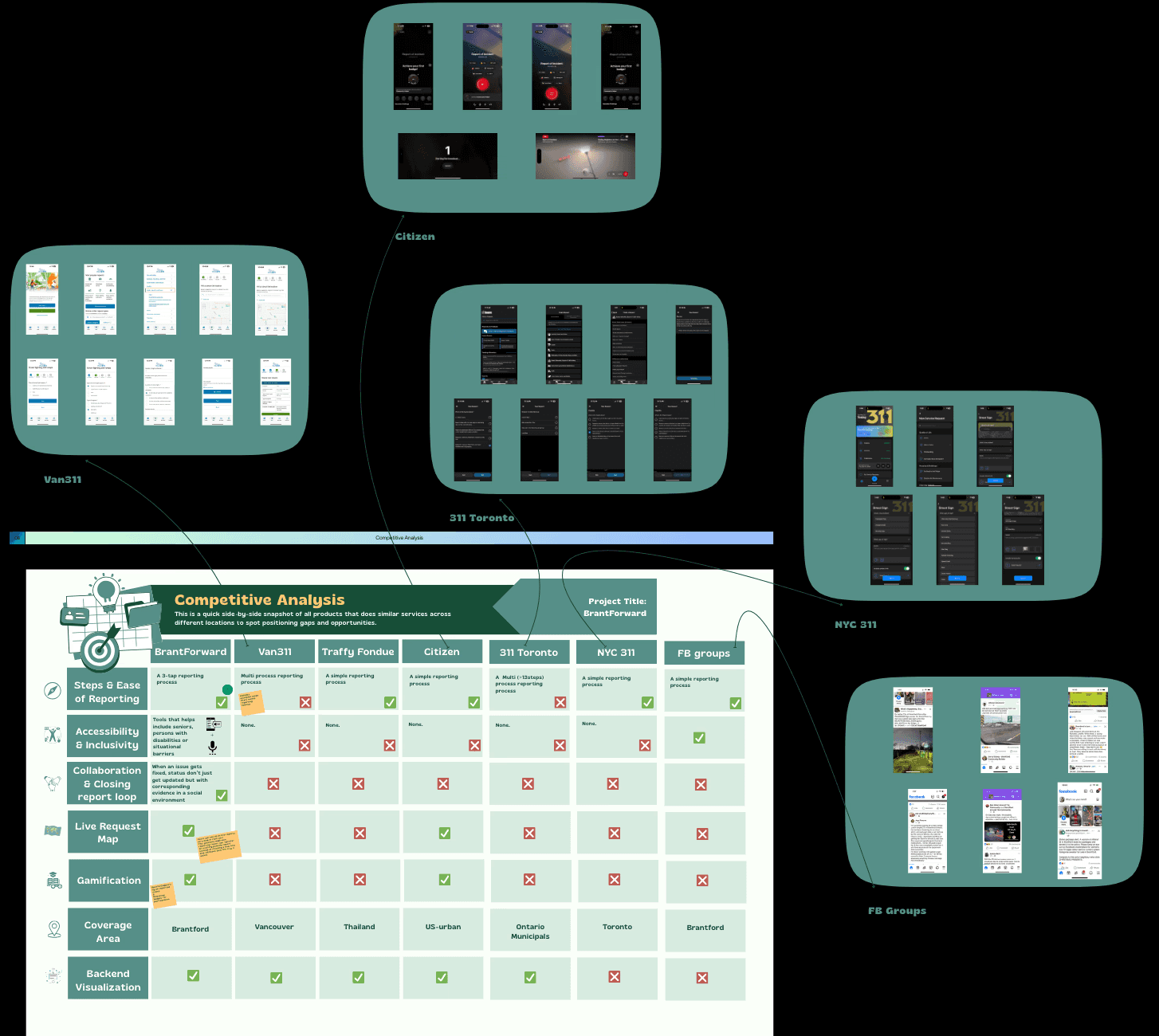
Competitive Analysis
Think-Aloud Usability Testing
This gave us depth—hearing participants narrate their thought process helped us understand confusion points we never would have caught otherwise. "Wait, what does 'upvote' mean?" was a lightbulb moment.
Quantitative Usability Testing with Contextual Observation
This gave us proof—objective metrics like task completion rates (70-100%), efficiency scores (55-95/100), and time-on-task measurements showed us exactly where our design succeeded or struggled.
Heuristic Evaluation
Using Nielsen's 10 usability principles, we systematically assessed our design against established best practices, catching issues like poor error prevention and unclear iconography before they became bigger problems.
Secondary Research
We interviewed an IT expert to understand the technical feasibility of our solution, learning about database architecture, privacy considerations (GDPR), and realistic development timelines (1.5 months with 2-3 developers).
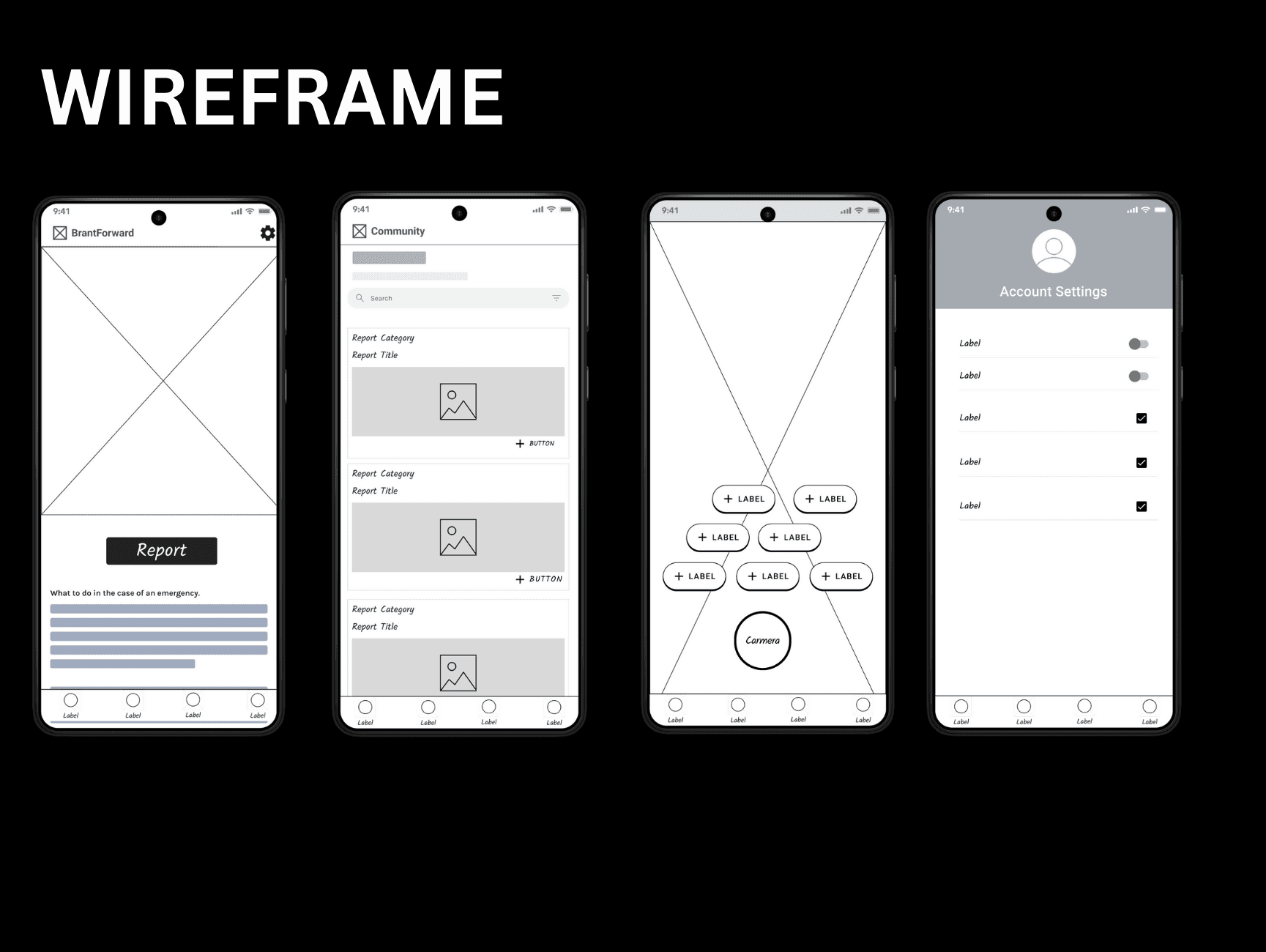
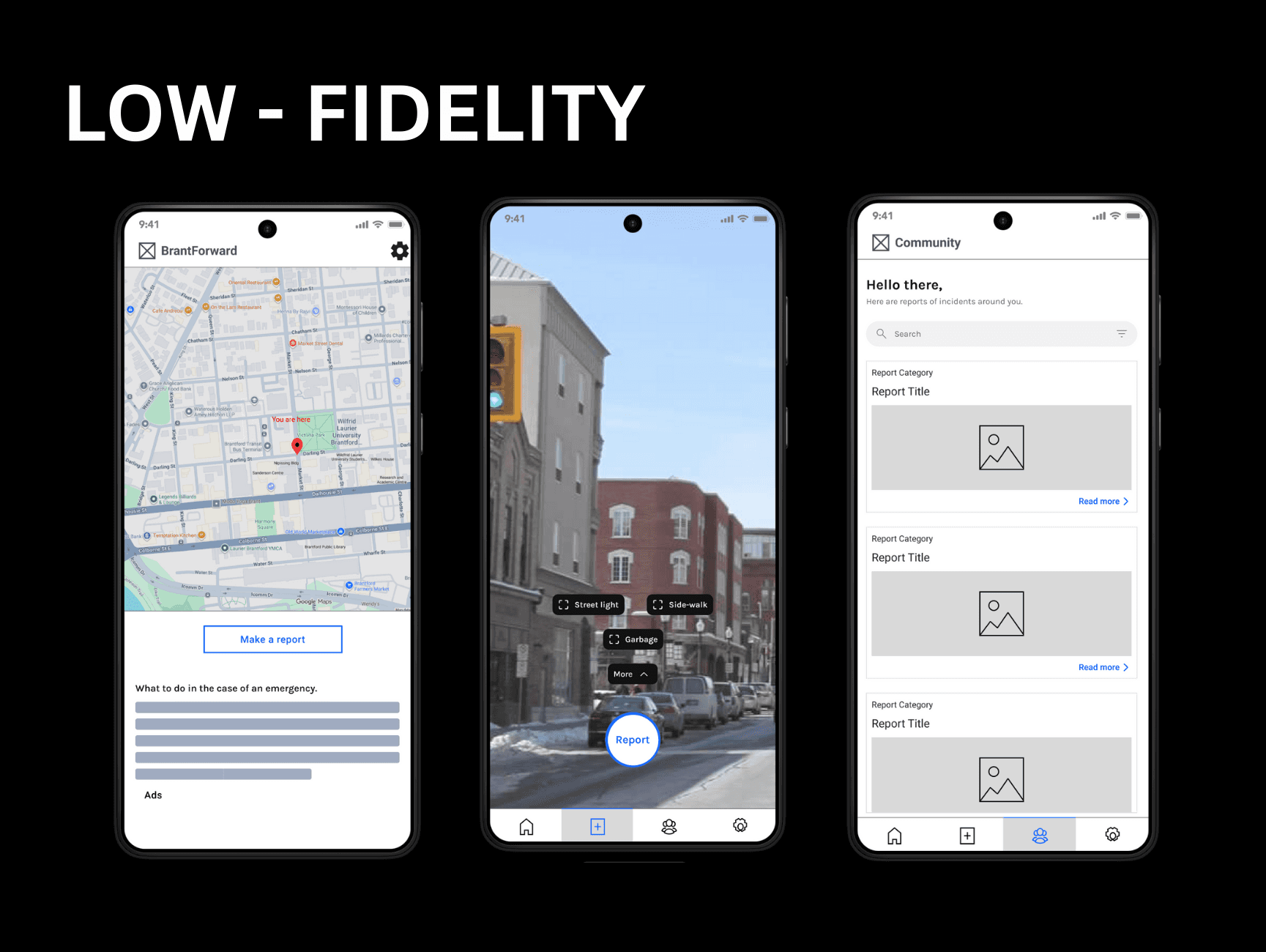
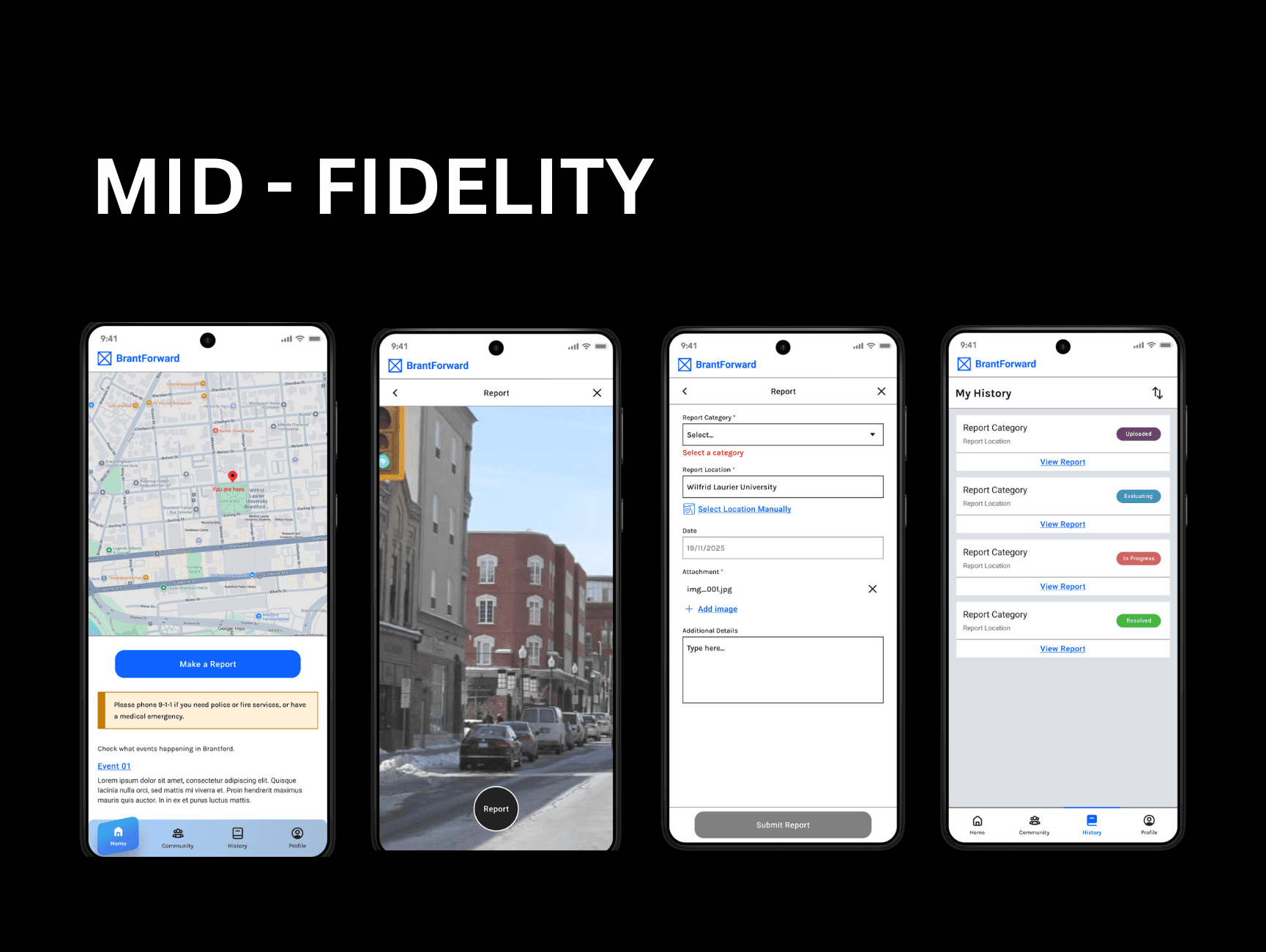
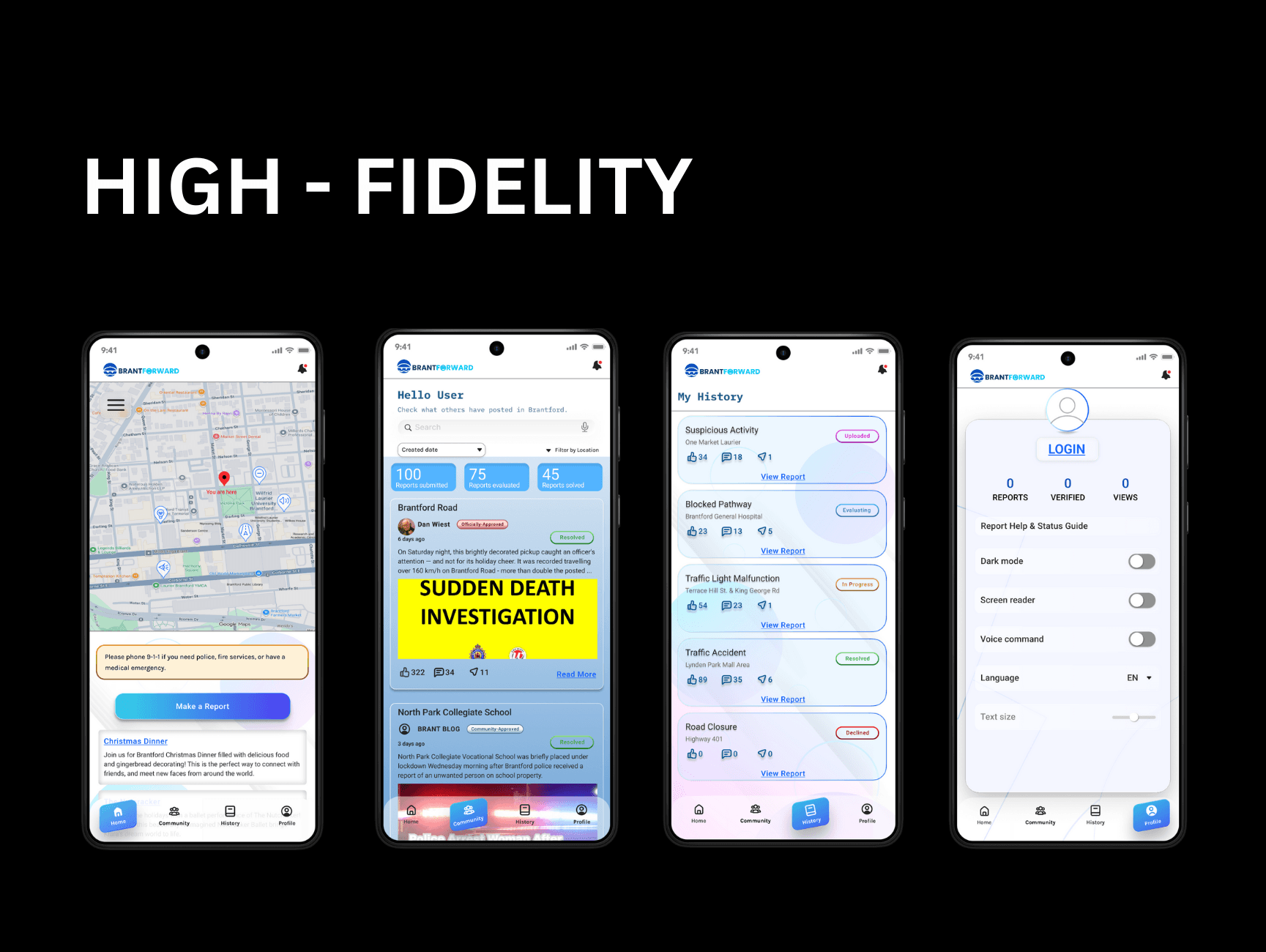
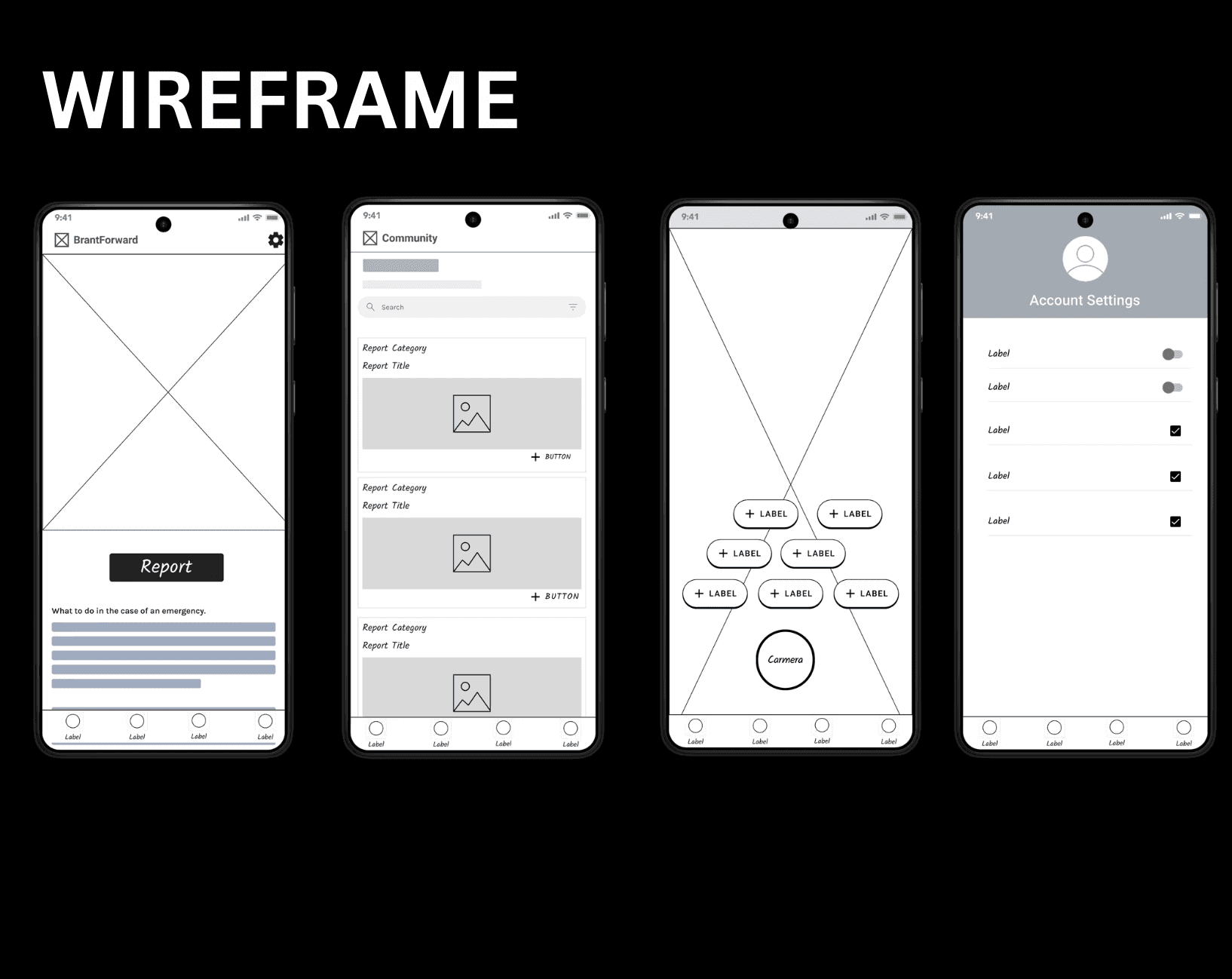
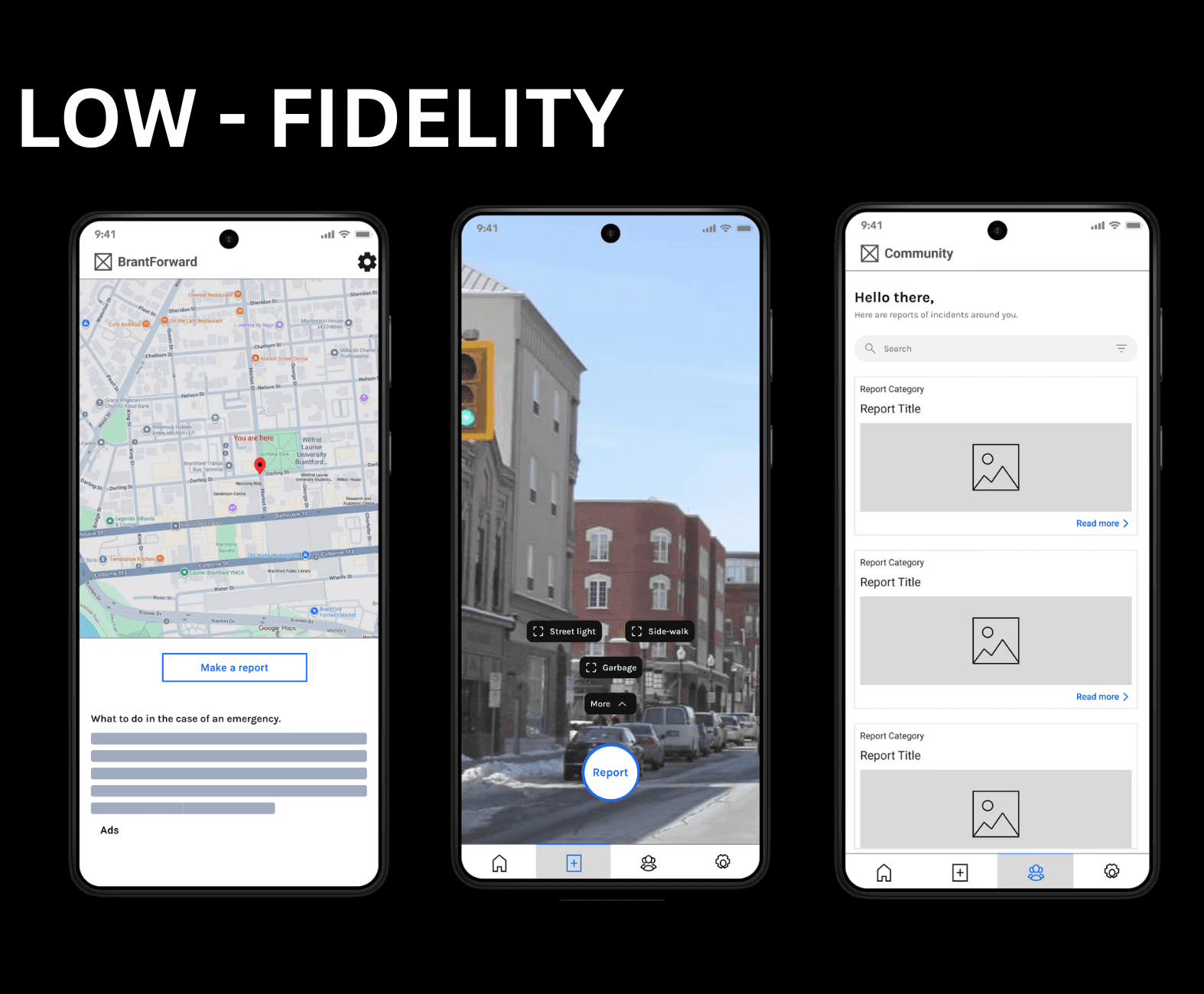
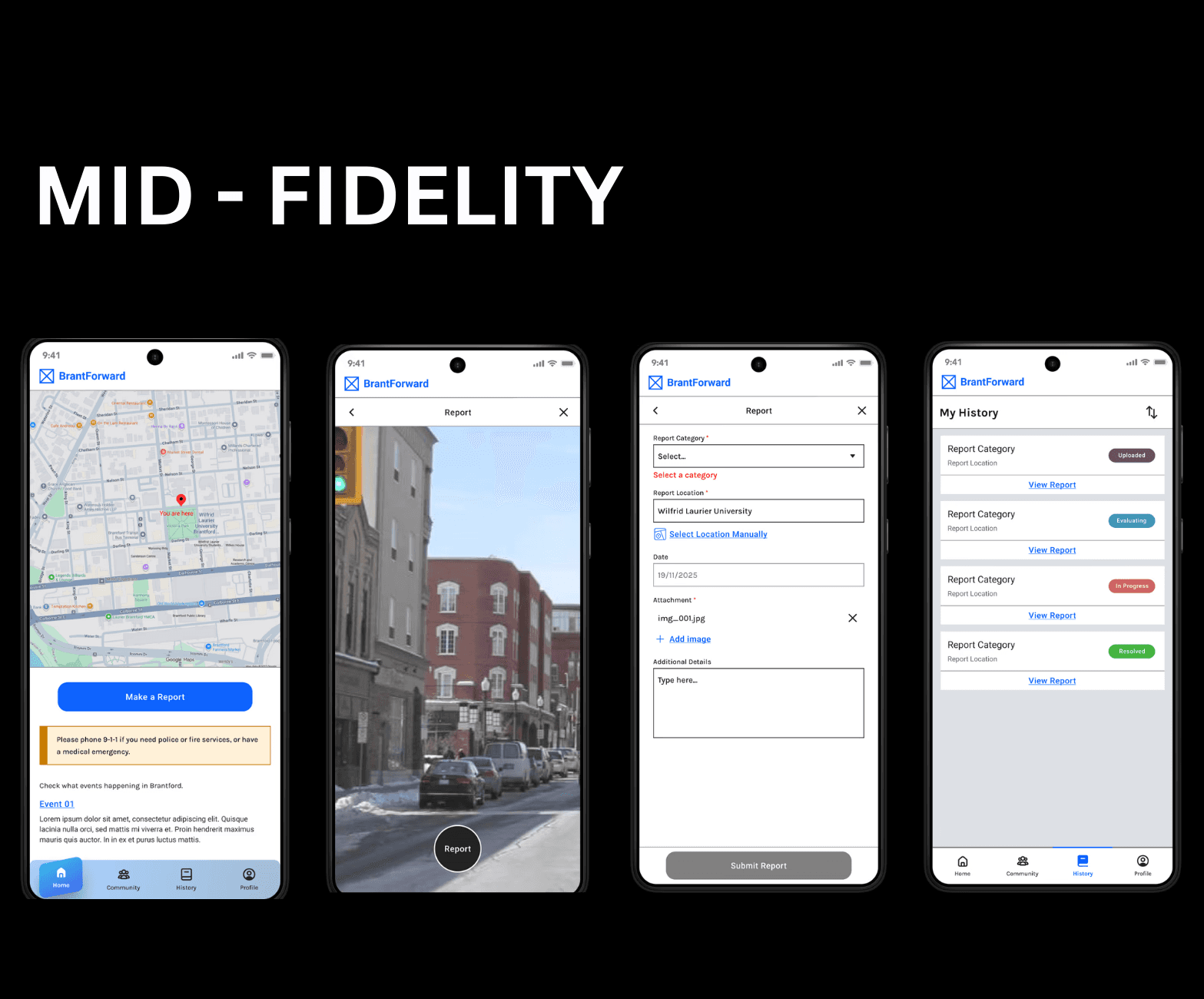
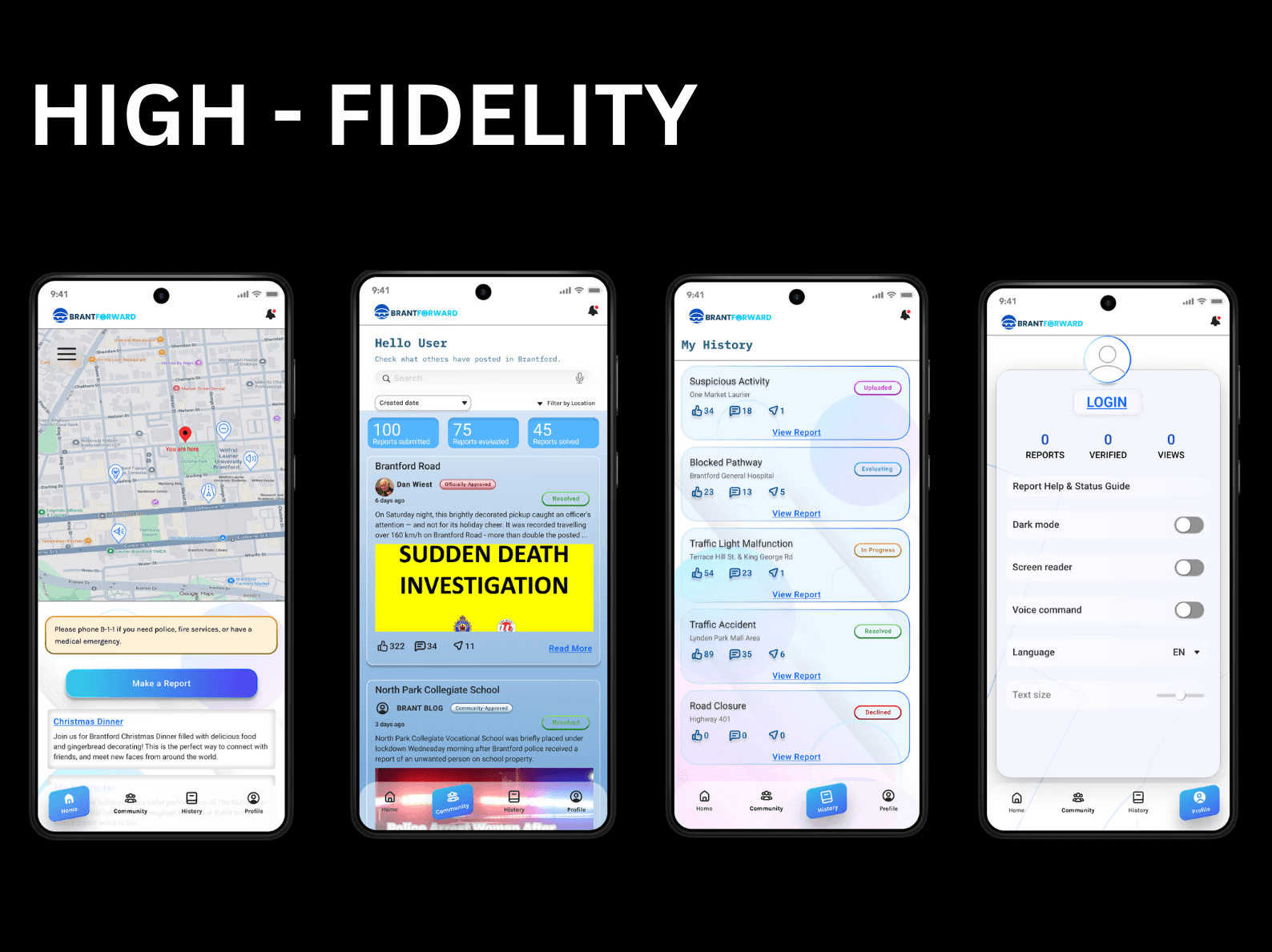
Iteration Summary
From Assumptions to Evidence
Early ideas were challenged through real user feedback, revealing gaps between intended and actual user behavior.
Refined Through Testing
Think-aloud sessions, contextual observation, and usability testing informed changes to navigation, labels, and reporting flow.
Validated with Data
Quantitative testing and heuristic evaluation confirmed which design decisions worked and where further improvements were needed.
Clear guidence for first time user
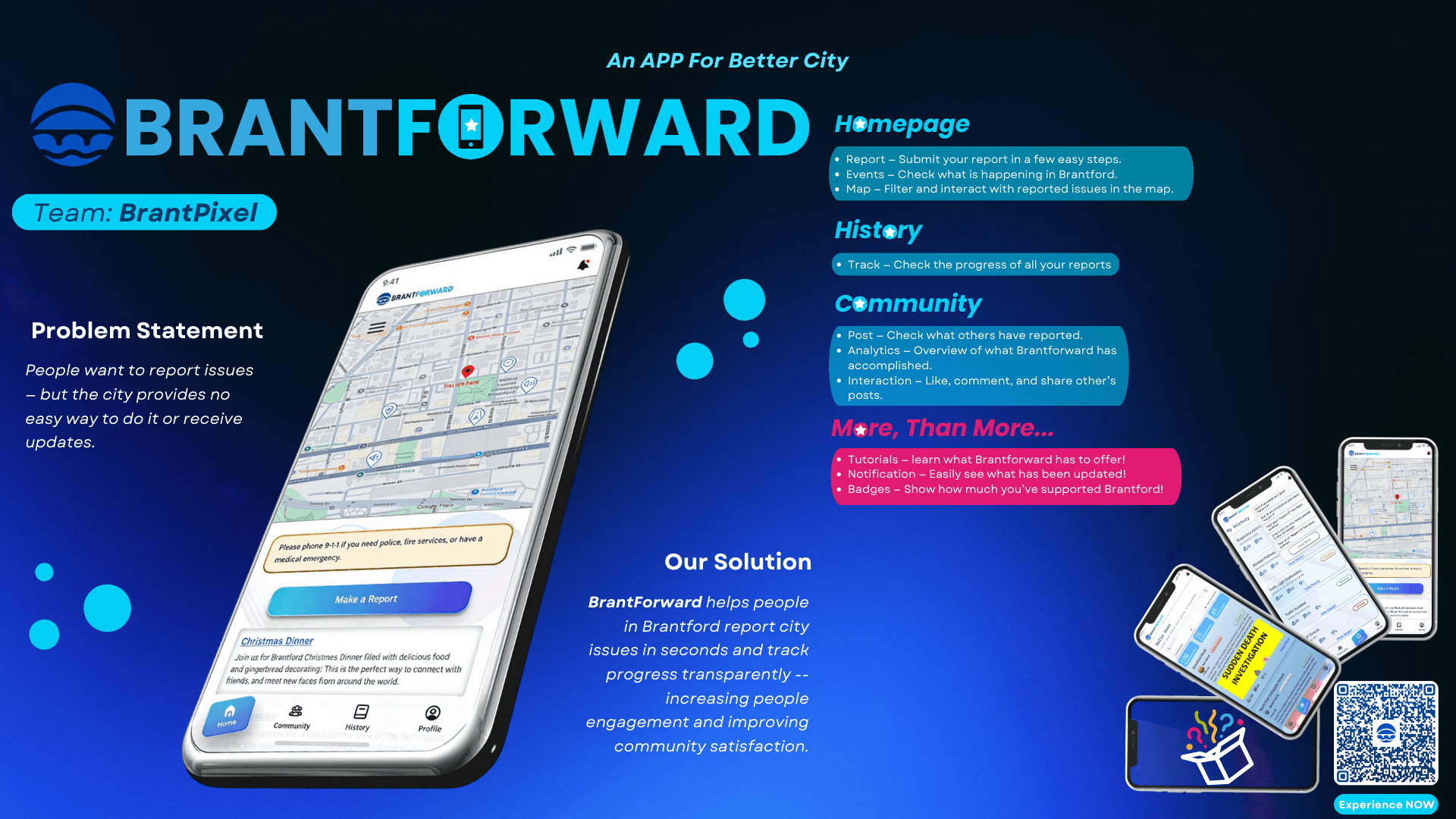
Provides a clear entry point to start a report (“Make a Report”).
Submit a report with three simple steps
Shows community activity, including reports, updates, and resolved issues.
Helps residents see the impact and the results.
Research First, Design Smarter
Iteration Drives Better UX
Continuous testing led to clearer flows and improved usability.
Context & Collaboration Matter
Community insights, accessibility focus, and team alignment strengthened outcomes.